Private infrastructure
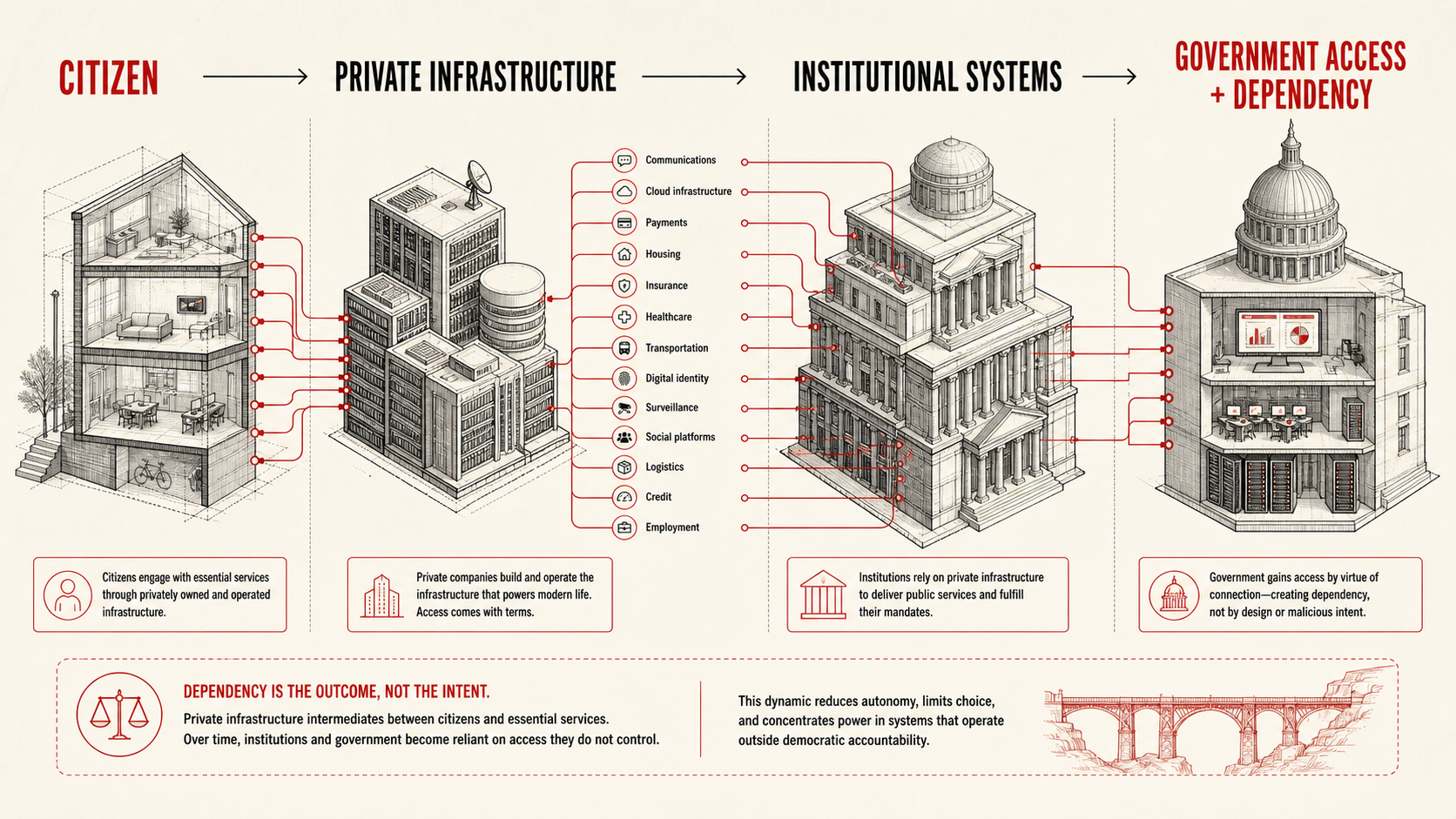
Is something you depend on controlled or mediated by private actors?

Capitonummism is what happens when concentrated private capital becomes the infrastructure society depends on.
We usually describe economic systems by asking who owns things: private companies or the state. Capitonummism asks a different question: Who controls the systems people cannot realistically opt out of?
A political-economic condition in which concentrated private capital becomes sufficiently powerful that ownership, infrastructure, and institutional influence begin functioning as forms of governance.
Private ownership remains. Markets remain. Elections and democratic institutions remain. But the systems people depend on may increasingly be controlled by a small number of highly concentrated private actors.
A simple recognition test
Can you meaningfully say no?
If an essential part of ordinary life is controlled or mediated by private corporations, you cannot realistically refuse participation without losing meaningful access, and that private infrastructure is deeply integrated with government systems or public authority, you may be looking at Capitonummism.
Is something you depend on controlled or mediated by private actors?
Can you realistically refuse it without losing access to ordinary participation?
Is that infrastructure used by, relied upon by, or substantially integrated with government?
When all three converge, private ownership begins functioning like governance.
Inconvenience is not dependency. Market dominance is not automatically governance. The threshold is meaningful inability to refuse combined with infrastructural dependence and public-private integration.
Traditional frameworks often separate government, markets, corporations, and citizens. Modern systems increasingly overlap.
When critical infrastructure is privately owned, private decisions can shape public life at enormous scale—not necessarily through intent, but through structural dependence.
Extreme wealth alone does not define Capitonummism. The transition occurs when private actors control infrastructure with several of these characteristics at once.
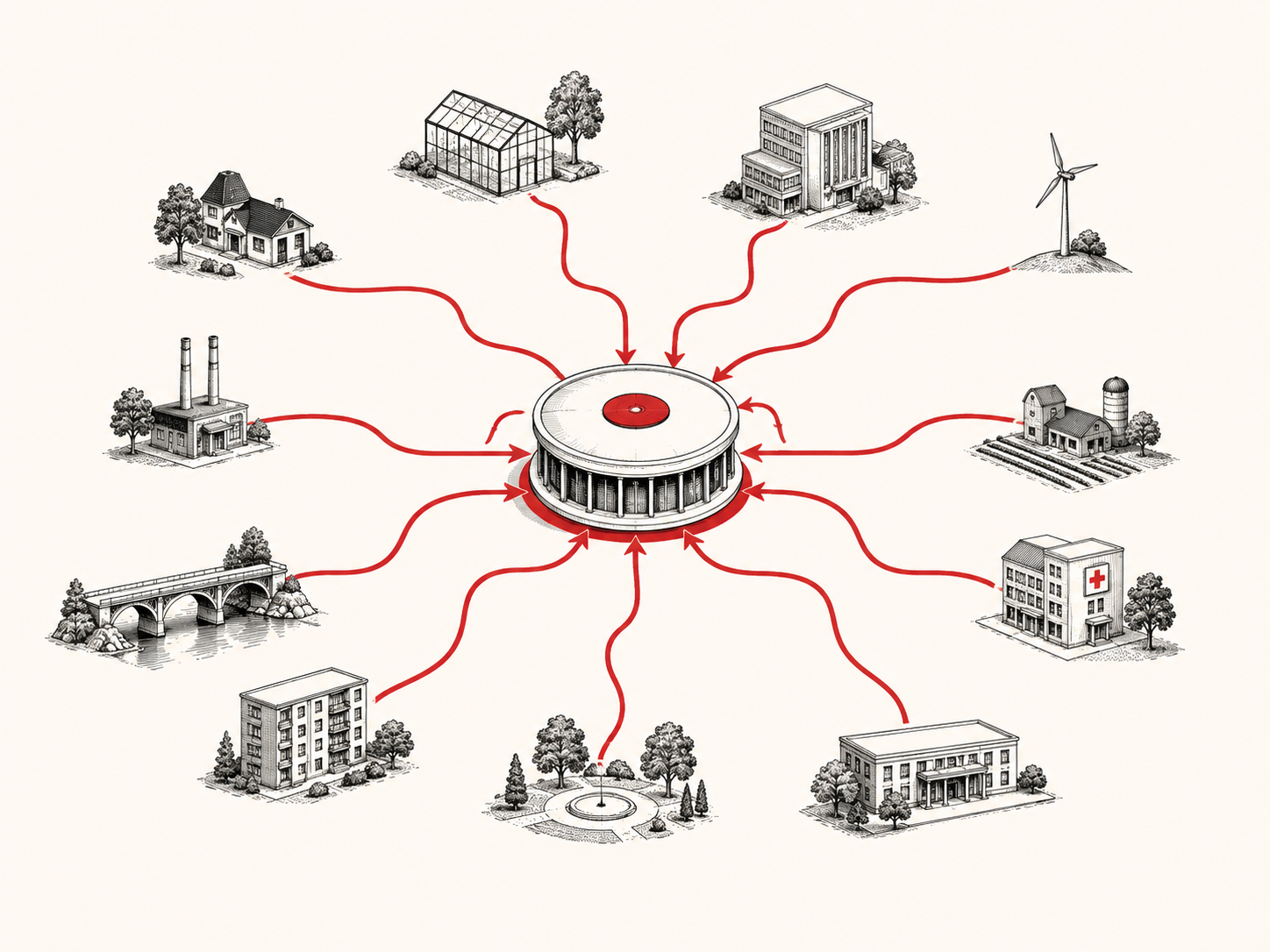
Large numbers of people rely on the system.
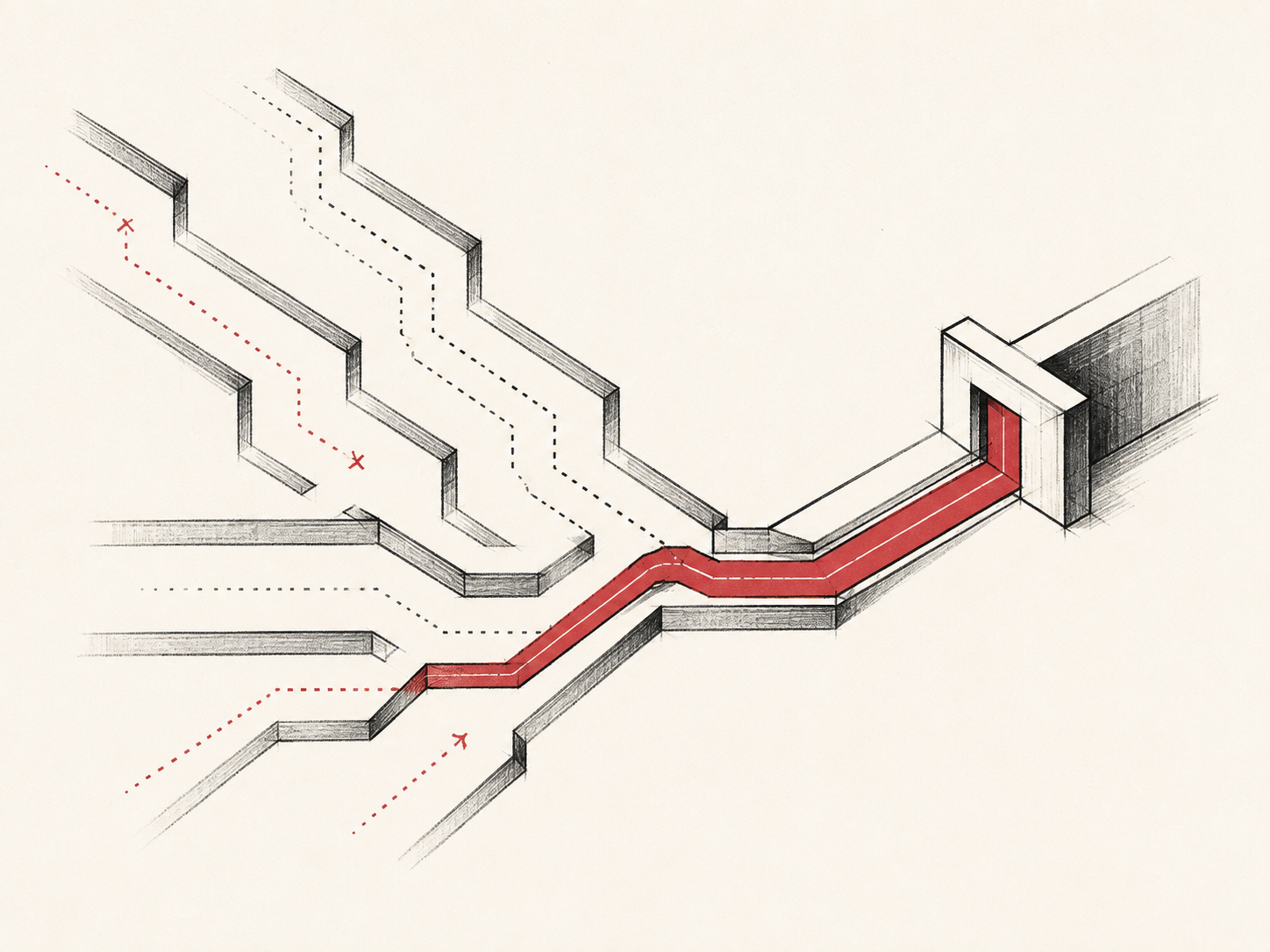
Meaningful substitutes are limited or costly.
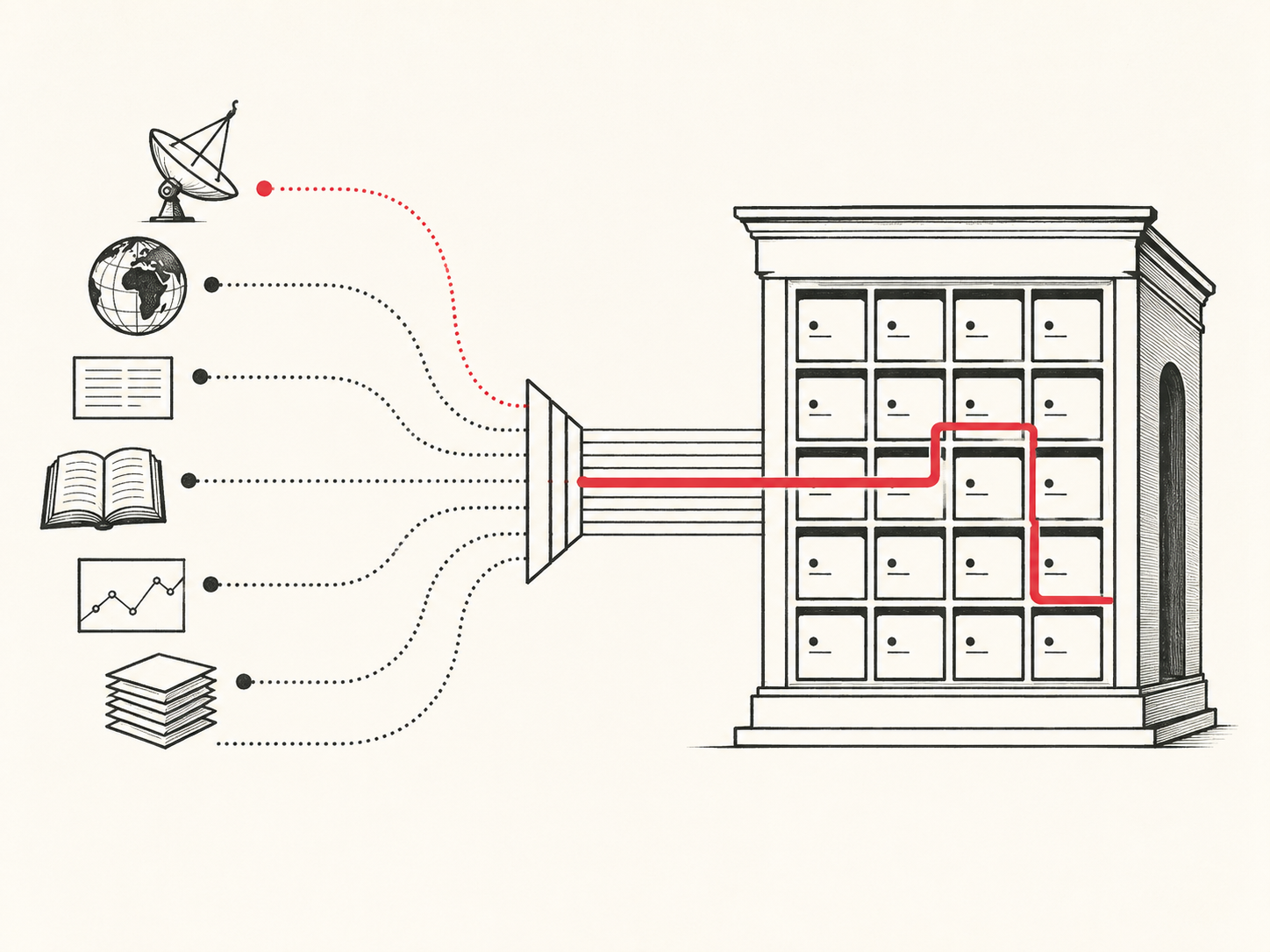
The system collects or mediates behavioral data.
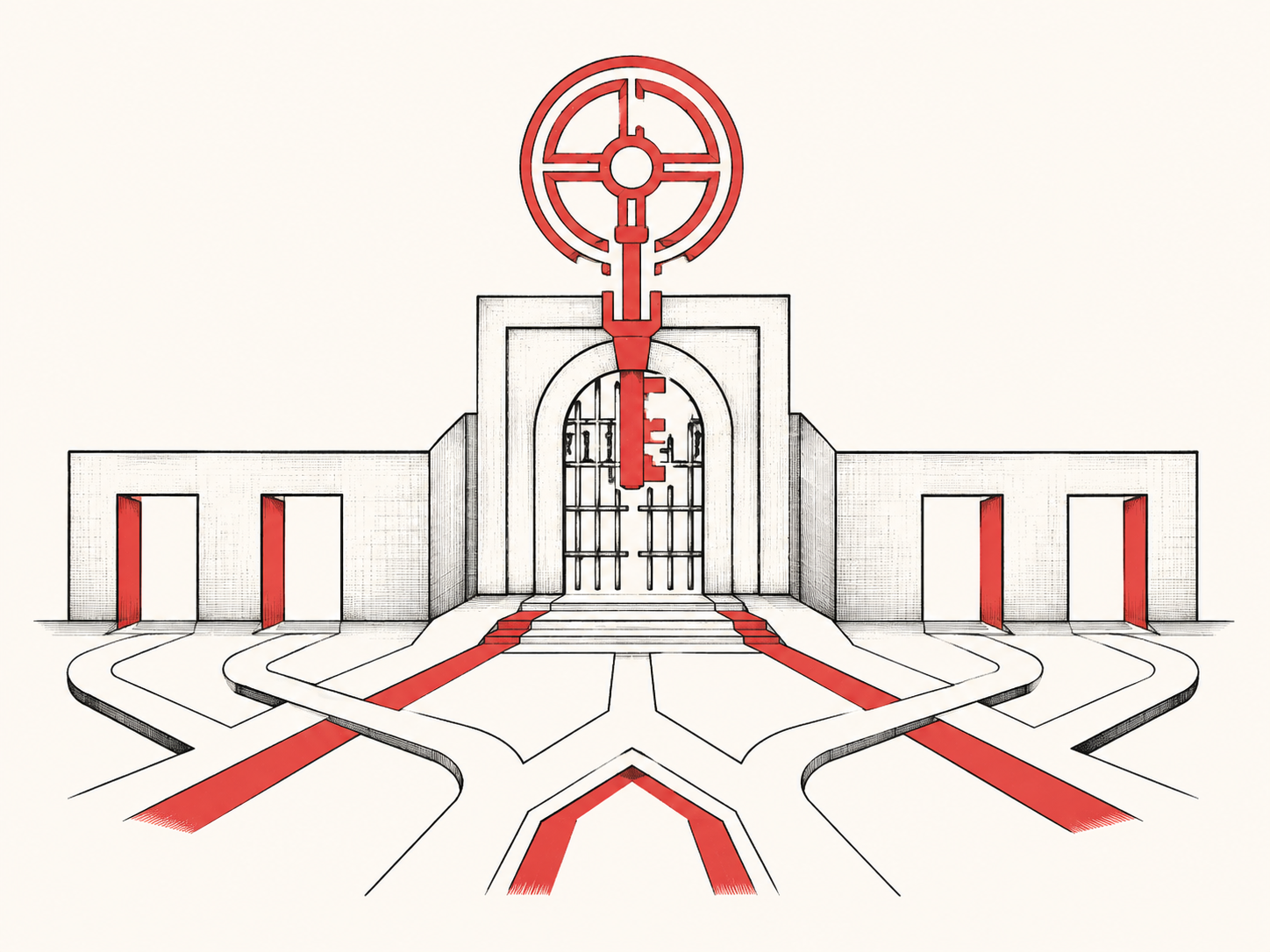
Participation in essential systems can be shaped or restricted.
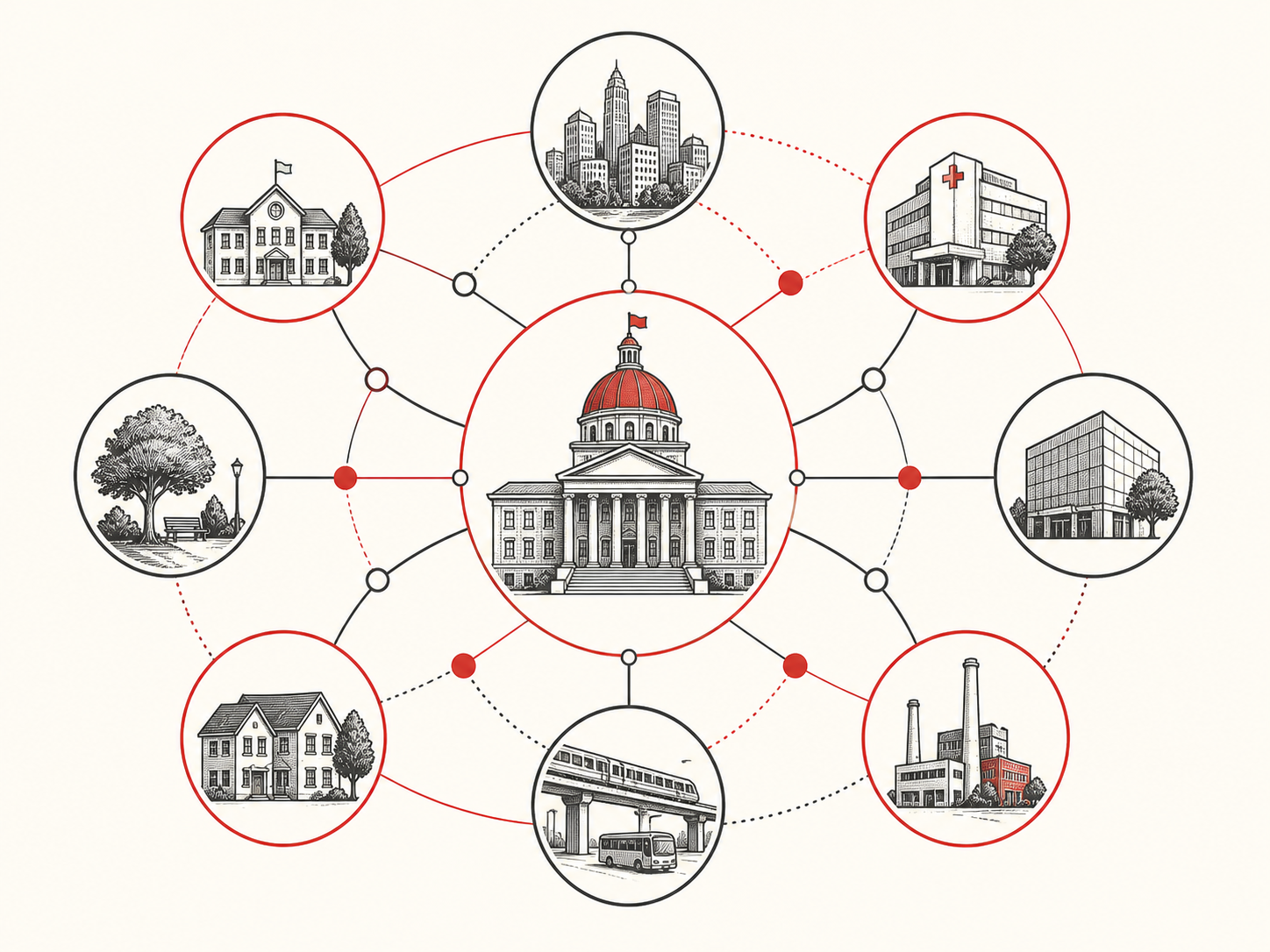
The system interacts directly with public institutions.
Constitutional protections primarily restrict government conduct. Modern surveillance infrastructure, however, is often assembled across private companies, public agencies, property owners, businesses, law enforcement, data brokers, and technology platforms.
The result can be a visibility layer that no single actor built alone.
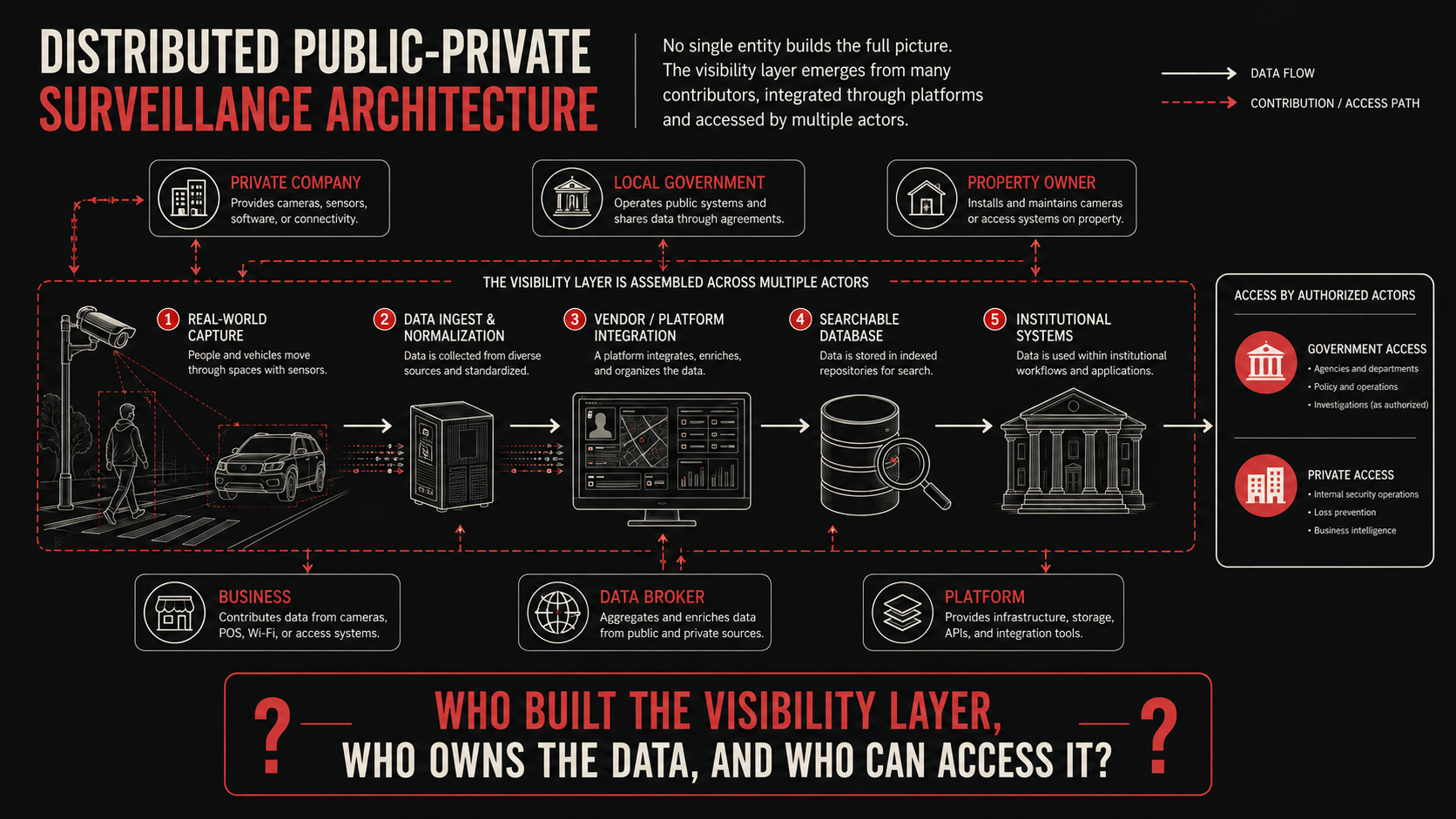
A license-plate camera may be privately manufactured. It may be purchased by a municipality, business, neighborhood association, or property owner. Its data may enter a broader searchable network. Law enforcement may gain access through contracts, partnerships, warrants, requests, shared databases, or other legal mechanisms.
The structural question is not simply “Is the government watching?” It is: “Who built the visibility layer, who owns the data, and who can access it?”

In communism, productive capital is theoretically collectively or state owned. In Capitonummism, productive capital remains privately owned. That difference matters. The concern is nearly the opposite: private systems may become concentrated enough to acquire powers once associated primarily with governments.
Distributed private ownership + markets
Collective or state ownership of productive capital
Private ownership may remain, while economic institutions become subordinated to authoritarian state objectives
Private ownership remains, but concentrated capital becomes infrastructural and begins exercising quasi-governing power
These categories are not interchangeable. Capitonummism is intended as a structural lens, not a replacement for established political terminology.
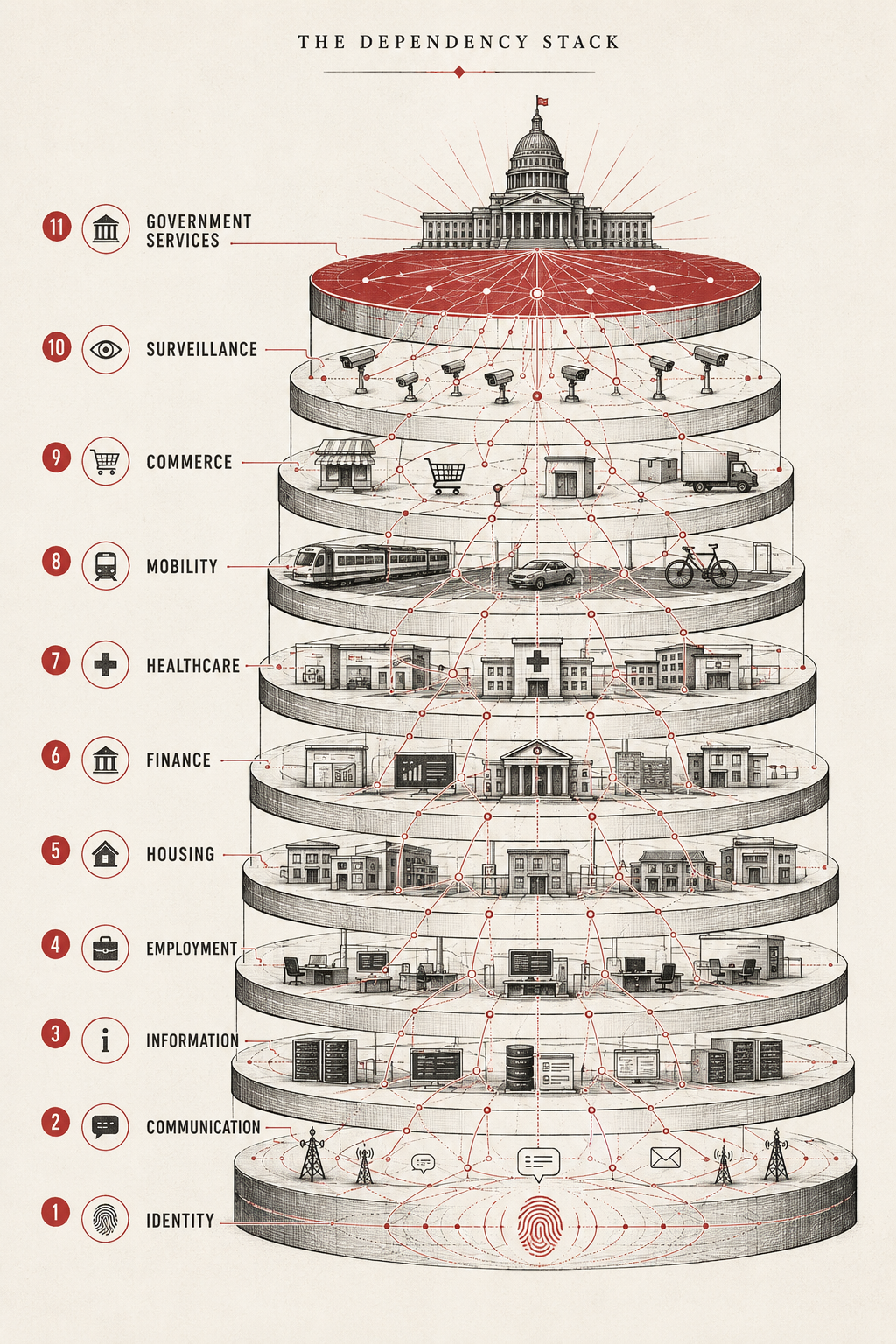
On paper, the society may still look decentralized. In practice, access to housing, communication, finance, mobility, information, employment, healthcare, and political influence may flow through a narrow group of systems.
The state does not have to own everything for ordinary people to experience centralized power.
Each layer may be useful on its own. The governing characteristic emerges when many essential layers pass through concentrated infrastructure.
Identity can determine access to communication. Communication shapes access to information and employment. Employment and credit affect housing, healthcare, and mobility. Commerce creates data; surveillance makes that activity visible; government services may rely on the same underlying systems.
No single layer needs to govern society on its own. The structural shift appears when the same narrow set of systems mediates several layers at once—and when refusing one layer can restrict access to the others.
The more essential systems are mediated this way, the more ownership begins functioning like governance.
Governments contract with companies. Companies rely on public law, procurement, subsidies, policing, and infrastructure. Private databases support public decisions; public institutions depend on private software. Traditional labels can obscure how power actually moves.
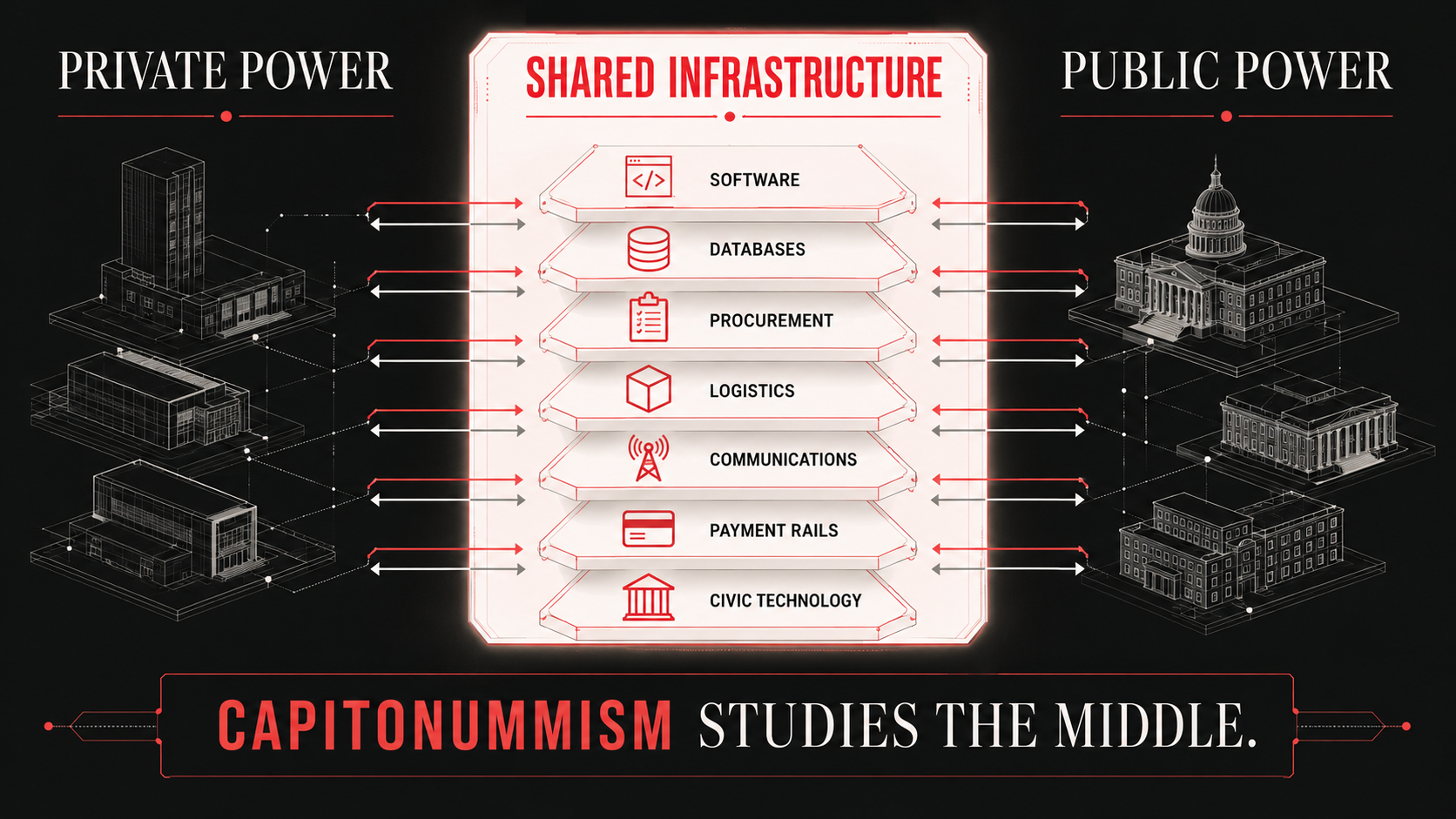
Wealth can purchase infrastructure, political access, media reach, data, expertise, legal capacity, property, institutional relationships, technological leverage, time, and optionality.
The critical shift occurs when wealth becomes a durable system advantage rather than simply personal consumption.
The issue is not only whether a service is technically voluntary. A more revealing question is whether people can realistically participate in modern life without it.
Can a person reasonably avoid digital identity systems?
Can they meaningfully participate without banking?
Can they opt out of credit scoring?
Can they avoid privately mediated employment platforms?
Can they live outside digital surveillance?
Can they access housing without financial screening systems?
Freedom requires more than formal permission. It requires viable alternatives.
Different sectors can sit at different points simultaneously. A country may have competitive consumer markets but highly concentrated banking, communications, defense, healthcare, data, or housing systems. The lens is most useful when applied by domain—not simply declared at the national level.
The Capitonummism Test
Open each condition to examine what it asks. The more conditions present simultaneously, the more useful the Capitonummism lens becomes.

EpsteinWatchlist examines documented connections among individuals, institutions, finance, philanthropy, politics, academia, technology, media, and other centers of influence.
Its relevance is not that every connection implies wrongdoing. It is that concentrated wealth often creates dense institutional networks that are difficult to see from the outside. Mapping relationships can help distinguish speculation from documented structural proximity.
Explore the network →It does not claim that wealthy people secretly coordinate every outcome.
It does not claim that every corporation acts maliciously.
It does not claim that government and private industry are the same thing.
It does not claim that markets inevitably become authoritarian.
It does not claim that established political terminology should be replaced.
It is a lens for examining what happens when concentrated private ownership becomes infrastructural enough to acquire governing characteristics.
The question is no longer simply who owns the company.
Who owns the conditions of participation?